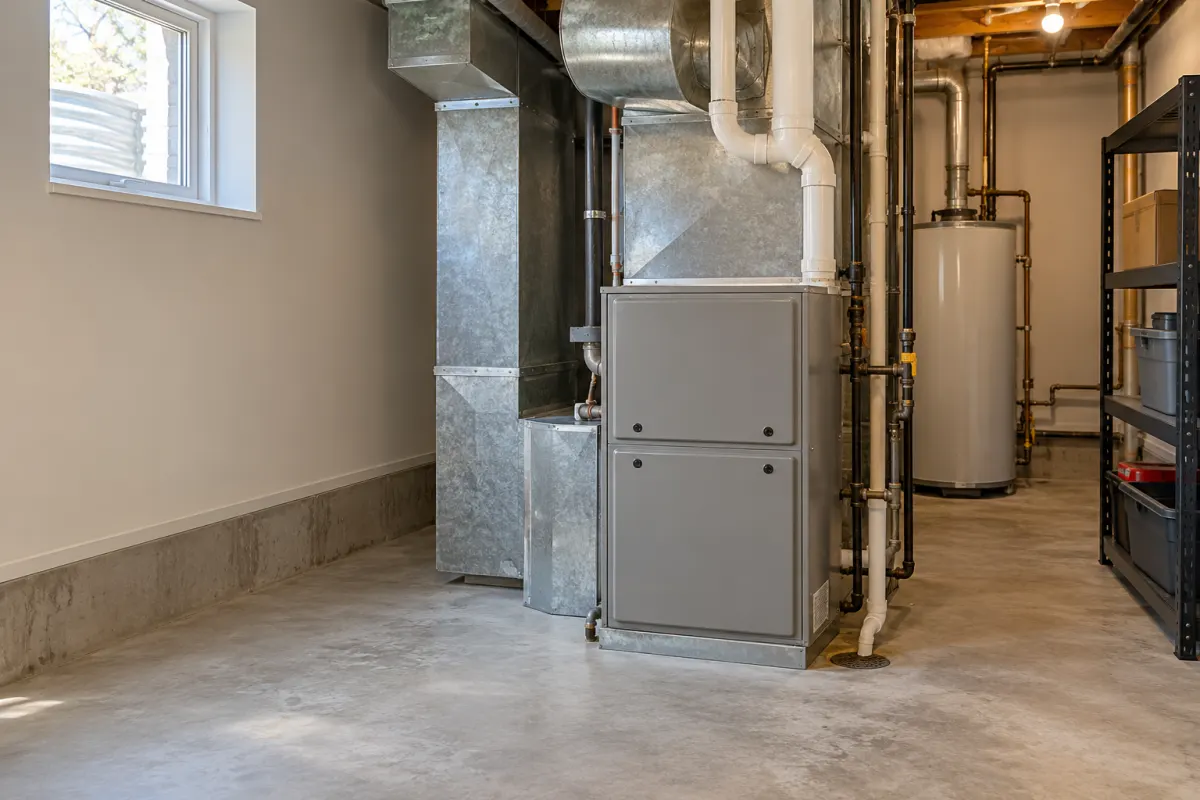
For a furnace installation estimate
Make the connections and approvals part of the price.
- State the fuel, selected equipment and assessment behind capacity.
- Identify venting, controls, ducts and any retained cooling components.
- Ask who handles permits, related trades, startup and future warranty visits.
Plan a furnace replacement around your home
A furnace replacement proposal should explain more than the price of a new cabinet. Fuel type, heating demand, venting, ducts, controls and installation conditions all belong in the conversation. The purpose is a clear, complete heating installation that addresses the reason you are considering replacement.
Begin by describing the current furnace, any recent diagnosis and the comfort problems you want solved. If an existing unit has been judged unsafe, ask what needs to happen immediately and whether it must remain off. A planned upgrade and an urgent no-heat situation may require different scheduling and decision steps.
First, understand the reason for replacement
Ask whether the recommendation follows a documented failure, repeated repairs, parts availability, a comfort complaint or a planned efficiency upgrade. Request the diagnosis and an explanation of any reasonable repair alternative. The age of the furnace is useful context, but it does not by itself identify a failed part or explain why replacement is the best option for your house.
For a substantial repair or replacement recommendation, another qualified opinion can help when the findings or scope are unclear. Do not postpone action on a specific safety concern while comparing optional features. Ask the provider to distinguish what is needed for safe operation from what is a comfort or efficiency preference.
For an active heating problem, start with furnace repair guidance. For the overall decision, use the repair-or-replace comparison.
Fuel, capacity and efficiency are separate questions
Confirm the fuel and the equipment type
Tell the contractor whether the current furnace uses natural gas, propane, oil or electricity. Do not assume that the same installation proposal covers a fuel conversion. Ask what additional supply, electrical, venting or site work a change would require and whether the business handles that work.
Ask for home-specific sizing
The contractor should assess the home’s heating demand and explain the proposed capacity. Ask about insulation, windows, additions and the areas the system must serve. ACCA Manual J provides a residential load-calculation method; a larger unit or the old cabinet’s size is not automatically the right design choice.
Understand the rating and operating features
For fuel-burning furnaces, AFUE describes rated annual fuel-use efficiency. It is not a prediction of the exact heat delivered to each room or the savings on your bill. The ENERGY STAR furnace resource explains efficiency considerations. Ask how the proposed efficiency, blower and controls fit your installation and comfort priorities.
Check the complete installation scope
| Item | Questions for the proposal |
|---|---|
| Furnace and controls | What model, fuel, capacity, efficiency rating and thermostat are included? |
| Venting and combustion air | What does this model require, and what existing arrangements must change? |
| Drainage, where applicable | Is condensate management needed, and what work is included? |
| Ducts and cooling compatibility | How will supply, return and any existing AC coil be evaluated? |
| Fuel and electrical connections | What will be reused, altered or handled by another trade? |
| Removal, access and protection | Who removes the old equipment, and how will the work area be managed? |
| Local permits and inspections | Who verifies the requirements, obtains permits and arranges inspections? |
| Startup and documentation | Which model-specific checks and handover documents are included? |
Some work is model- or site-dependent. The estimate should make its assumptions clear and explain how a change will be approved if conditions differ. Carrier’s gas furnace replacement resource discusses equipment choice and installation considerations; its broad cost examples are not a quote for your property.
Make cold-room and airflow concerns part of the proposal
Tell the contractor which rooms are cold, when the problem occurs and whether it existed before the recent failure. Ask how the assessment distinguishes equipment output from air distribution or conditions in the house. A new furnace alone does not document that every comfort problem has been addressed.
Discuss any proposed duct change separately so you can understand its purpose and price. Ask how the contractor will assess airflow and confirm that the installation meets the equipment manufacturer’s requirements. The ENERGY STAR installation checklist supports asking about home-specific sizing and airflow, rather than relying solely on a product rating.
Compare the price, warranty and exclusions
Request the installed price, payment terms, equipment list and scope in writing. Compare the labor, removal, connections, permit fees and conditional work as well as the furnace model. Ask whether any part of the job is subcontracted and who is responsible if an installation concern arises.
Parts and labor warranties can differ. Clarify who registers the equipment, whether there is a registration deadline and what maintenance or other conditions apply. Ask who handles a service visit during the warranty period and which charges could still be your responsibility. Keep the warranty terms with the invoice.
If a rebate is mentioned, verify the current program’s equipment, fuel, utility-account and application requirements with its administrator before purchasing. If financing is offered, compare its stated rate, fees, term and total repayment separately from the cash installation price. Neither incentive eligibility nor financing approval should be assumed.
Prepare for installation and handover
- Agree on the scope, schedule, payment milestones and change-approval process.
- Confirm access, removal arrangements and who must be present.
- Ask about the expected interruption to heat and any necessary site preparation.
- Verify who is handling local permits and inspections where required.
- Request startup information, operating instructions and model/serial numbers.
- Ask for a thermostat demonstration, filter-care instructions and the service contact.
For fuel-burning equipment, ask the contractor to document the checks required for the model and installation, including safe operation. Keep any applicable inspection records. Do not attempt to modify venting, fuel connections or safety controls after installation.
For a gas smell or carbon monoxide alarm, leave the home and call emergency services from a safe location. A replacement booking does not replace emergency response.
(877) 803-4250Turn the recommendation into a usable decision
Compare the written scope
A furnace quote should name the retrofit work.
Too vague: “Furnace replacement including installation”
A useful format: “Install [model/fuel] based on [assessment]. Includes [venting, connections, controls and distribution work]. Retains [components] subject to [compatibility check]. Permit and inspection responsibility is [party]; [specific tasks] are excluded.”
Use this as a scope checklist. Existing venting or electrical connections should not be assumed suitable merely because the old equipment used them. Ask what the contractor assessed and what remains conditional. Keep any changes, fees and approval responsibility visible before comparing totals.
Compare sizing and distribution questions, included installation work and parts versus labor coverage. Verify account-specific offers with the rebate checklist before subtracting a conditional benefit.
Where the address changes the next step
Lancaster’s exterior-review considerations and Prescott’s replacement-category checks are examples of local questions to resolve for the actual parcel.
Use the local HVAC resource directory for the researched cities. Verify the property, account and current requirements before applying one city’s guidance to another address.
Furnace replacement questions
Is the highest-efficiency furnace always the best choice?
Compare the complete installation and your home’s needs, not a rating alone. Ask about model-specific venting, drainage, controls, installation cost and operating assumptions.
Will a new furnace fix every cold room?
That needs assessment. Ask whether the problem involves heating capacity, airflow, ducts or the home itself, and how the proposal addresses the findings.
Do I have to replace the AC at the same time?
Not automatically. Ask how the new furnace and blower will work with the existing cooling equipment and what the compatibility assessment found.
Should I accept a replacement recommendation based only on age?
Request the condition assessment, diagnosis and reasons. Age provides context; compare reasonable alternatives and get another qualified opinion when a major recommendation is unclear.