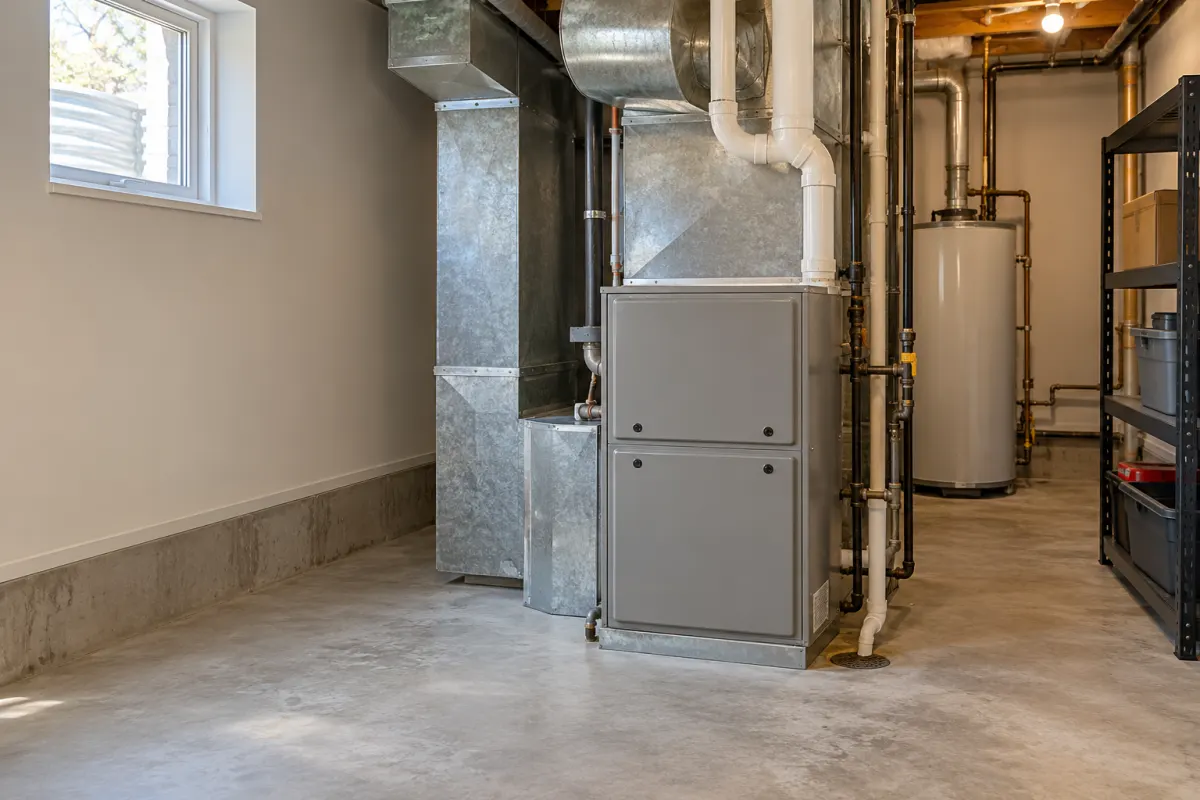
For a furnace repair conversation
Keep the fuel, symptom and safety advice together.
- Identify the installed furnace and fuel from accessible records; name another heating system separately.
- Describe shutdown timing or an externally visible message without repeated resets.
- Ask what failed, whether the system should remain off and what the repair would resolve.
No heat? Separate the warning signs from the service problem.
A furnace that will not heat the home needs a clear explanation, especially when it shuts down repeatedly or behaves differently from normal. Begin with what you can safely observe: the thermostat display, the timing of the problem and any message visible without opening the equipment. Tell the provider whether the furnace uses natural gas, propane, oil or electricity, if you know.
This page helps you prepare for residential furnace repair and understand the visit. It does not provide burner, ignition, gas-valve or electrical repair instructions. If your home uses a boiler or another heating system, identify it when arranging service; a furnace repair appointment may not cover that equipment.
When to leave the home and seek emergency help
Gas smell or carbon monoxide alarm
Leave the home immediately. Call 911 from a safe location outside; for a suspected gas leak, also notify the gas utility. Do not use a phone inside, operate switches, attempt to relight equipment or look for the leak. Follow emergency responders’ instructions.
A service appointment is not a substitute for emergency response. The CPSC carbon monoxide guidance and PHMSA gas-leak guidance explain why leaving and calling from a safe location take priority. Do not return to operating equipment until the relevant responders or qualified professionals say it is safe.
Heating problems to describe to the technician
| Symptom | Useful observation | What to ask |
|---|---|---|
| Furnace does not start | Thermostat mode and display; when heat last worked. | What prevented the heating cycle from starting? |
| Blower runs without useful heat | Whether this happens throughout the cycle or only briefly. | Is the furnace producing heat, and is air moving as intended? |
| Starts, then shuts down again | The repeated pattern and any safely visible error code. | What caused the shutdown, and what test confirms it? |
| Some rooms stay cold | Which rooms are affected and whether the problem is longstanding. | Does this require equipment, airflow or duct assessment? |
| Unfamiliar noise or odor | Where it occurs and when; do not investigate a suspected gas leak. | Should the system remain off until it is assessed? |
Carrier’s furnace troubleshooting guidance distinguishes basic observations from problems requiring a professional. An error code or shutdown is information for diagnosis; it is not permission to bypass a safety control or repeatedly reset the unit.
Safe observations before the appointment
If there are no emergency warnings, confirm that the thermostat is requesting heat and note its displayed temperature. Check the owner’s manual for routine filter care and record when the trouble began. Note any recent power interruption, thermostat change or maintenance visit. A photo of an accessible display can be useful, but do not remove panels to obtain it.
Do not attempt to relight unfamiliar equipment, adjust a gas valve, clean internal combustion components or reset an oil burner repeatedly. Avoid touching hot surfaces or opening electrical compartments. Tell the provider about any repeated shutdown, soot, unusual odor or suspected vent problem rather than trying to correct it yourself.
For a heating problem during severe weather, tell the provider whether the home has lost all heat and whether vulnerable occupants are present. Confirm actual scheduling availability. Do not use an oven or another appliance not designed for space heating to warm the home.
What a useful furnace diagnosis should explain
Ask the technician to connect the findings to the proposed repair. Fuel-burning equipment requires attention to safe operation as well as comfort. The scope depends on the furnace and symptoms; a repair recommendation should state what was found, what work is needed and whether the unit can safely operate while you decide.
The ENERGY STAR maintenance checklist identifies combustion, heat-exchanger and system-control checks as professional work. Ask which checks are relevant to your furnace and how the findings will be recorded. Do not treat a general checklist as evidence that a particular component in your home has failed.
- What caused the no-heat condition or shutdown?
- What evidence supports the proposed component repair?
- Are there safety concerns, and what action is needed now?
- Would a comfort or airflow problem remain after this repair?
- What operating checks will be completed before the job is finished?
Review fees, parts and repair terms
Before booking, confirm service at the exact address, the diagnostic charge, scheduling window and any after-hours fee. Ask whether the visit charge is credited toward approved work. A provider should also confirm that it handles your fuel type and furnace model rather than assuming every heating business services every system.
After diagnosis, request a written price identifying the parts and labor, any conditional charges and the warranty on the repair. Clarify how an estimate changes if another problem is discovered. Existing manufacturer coverage may apply to some parts while labor or service charges remain separate; ask who will verify eligibility and handle a claim.
If a heat exchanger or another major component is said to be unsafe, request a clear explanation and documentation of the finding. Ask whether repair is an available option and whether the furnace must remain off. A second qualified opinion can be useful when a major recommendation is unclear, without delaying action on an identified safety concern.
Compare a major repair with furnace replacement
Consider the repair price, available parts, remaining condition and history of the furnace alongside a complete replacement proposal. Age alone is not a diagnosis, and a new furnace is not automatically a solution for a longstanding cold-room complaint. Ask what each option would actually change in your home.
For replacement, the proposal should address the fuel, sizing, venting, duct connections and required installation work. Compare the scope before comparing the headline price. See furnace replacement planning and the repair-or-replace decision guide for questions to take to each contractor.
Prepare for furnace service
- Address, ZIP code and access arrangements.
- Fuel type and equipment model, if safely available.
- Thermostat setting, symptoms and accessible error messages.
- Recent repair invoices and warranty documents.
- Whether the whole home has lost heat or only certain rooms are uncomfortable.
- Who is authorized to approve work; renters should coordinate with the property owner.
Let the provider know about restricted access, pets or an equipment location that may require special arrangements. You do not need to enter an unsafe area to prepare for the visit.
(877) 803-4250Turn the recommendation into a usable decision
Compare the written scope
A no-heat diagnosis needs more than a part name.
Too vague: “Replace control; furnace is old”
A useful format: “The finding supporting the proposed repair is [observation/test result]. We recommend [work]. The system should be [operating status] until then. The repair includes [scope], and [remaining concern] needs separate discussion.”
Use this format to ask for a written explanation, not to prescribe tests or authorize unsafe operation. If replacement is also recommended, keep its complete proposal alongside the documented repair. A repair price and a cabinet-only replacement price are not comparable scopes.
Use the no-heat observation guide for a useful symptom record and warranty questions to separate parts, labor and any visit charge. A room that has always been cold belongs in a comfort assessment, even if a failed component is repaired.
Where the address changes the next step
Longmont’s heating-led resource connects winter requests to property and utility checks; York’s guide adds ownership and city/township considerations.
Use the local HVAC resource directory for the researched cities. Verify the property, account and current requirements before applying one city’s guidance to another address.
Furnace repair questions
Does a furnace error code identify the exact repair?
It gives the technician a starting point. The cause still needs assessment, and the meaning varies by model. Share the visible code and avoid bypassing controls or repeatedly resetting the furnace.
Should a furnace blowing cool air be replaced?
Not on that symptom alone. Ask whether the furnace is producing heat, whether the blower behavior is normal for its cycle and what the diagnostic findings show.
Can I use another fuel-burning appliance for heat?
Do not use appliances such as a gas oven as a space heater. Follow emergency and equipment guidance; improper use can create dangerous conditions.
What if replacement is recommended during a repair visit?
Ask for the diagnosis and the reason repair is or is not practical. Obtain a complete written replacement scope and another qualified opinion when a substantial recommendation is unclear.